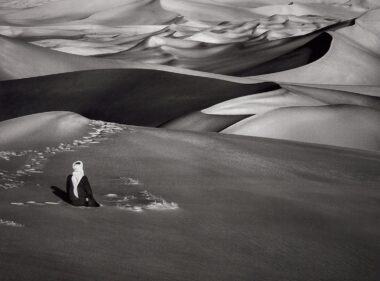
Sebastiao Salgado

The first image I recall seeing by Sebastiao Salgado was this desperate image from his book Gold. It was probably the mid-eighties and ironically, given that showed men driven mad by their search for gold, it was in a Sunday newspaper supplement.
Salgado was born in Aimorés, Brazil. He trained as an economist before becoming a photographer in the early 1970s. He earned an MA in economics from São Paulo University in 1968 and a PhD in economics from the University of Paris in 1971. His work at the International Coffee Organization in London required him to make frequent trips to Africa, and his desire to document these experiences sparked his interest in photography; by 1974 he was freelancing as a photojournalist for the Sygma agency in Paris, before joining Magnum, the international photography cooperative founded in 1947.
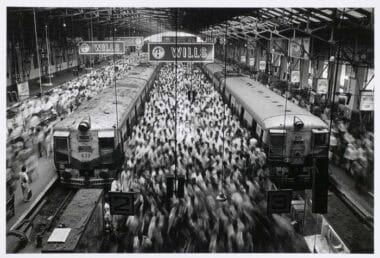
Sebastião Salgado's earlier photographs often portray individuals living in desperate economic circumstances. Later he started to represent the wider view of their surroundings too. Because he insists on presenting his pictures in series and because each work's point of view doesn't to separate subject from context, Salgado achieves a difficult balance. His photographs impart the dignity and integrity of his subjects without soliciting pity, as many other photographs from the Third World do. Salgado's photography communicates a subtle understanding of social and economic situations that is seldom available in other photographers' representations of similar themes.

Salgado has produced a number of extended documentary series throughout his career, several of which have been published. These include Sahel: L'homme en détresse (1986), Other Americas (1986), An Uncertain Grace (1990), and Workers (1993), a worldwide investigation of the increasing obsolescence of manual labor. Salgado has won many honors for his work, among them the Eugene Smith Award for Humanitarian Photography, two ICP Infinity Awards for Journalism, the Erna and Victor Hasselblad Award, and the Arles International Festival's prize for best photography book of the year for Workers. He also acted as a UNICEF Goodwill Ambassador from 2001.
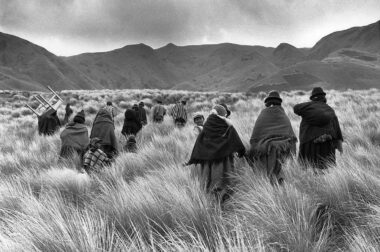
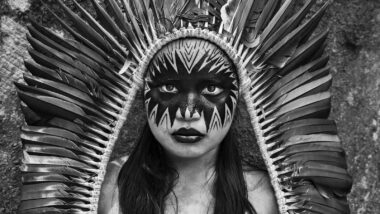
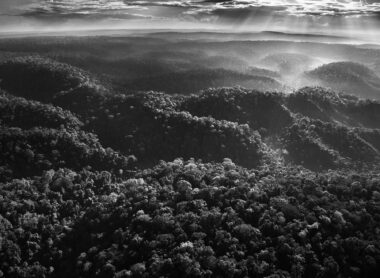
Between 2004 and 2011, Salgado worked on Genesis, aiming at the presentation of the unblemished faces of nature and humanity. It consists of a series of photographs of landscapes and wildlife, as well as of human communities that continue to live in accordance with their ancestral traditions and cultures. This body of work is conceived as a potential path to humanity's rediscovery of itself in nature.

In September and October 2007, Salgado displayed his photographs of coffee workers from India, Guatemala, Ethiopia, and Brazil at the Brazilian Embassy in London. The aim of the project was to raise public awareness of the origins of the popular drink. Salgado went on to photograph the landscape and people of the Amazon Rainforest (Amazônia) in Brazil, a subject close to his heart as his wife Lélia and Sebastião worked since the 1990s on the restoration of a part of the Atlantic Forest in Brazil. In 1998, they succeeded in turning 17,000 acres (6,900 ha) into a nature reserve and created the Instituto Terra. The institute is dedicated to a mission of reforestation, conservation and environmental education.

He travelled in more than 120 countries for his photographic projects, which appeared in numerous press publications and books. It was on his travels to Africa that Salgado first started seriously taking photographs. He chose to abandon a career as an economist and switched to photography in 1973, working initially on news assignments before veering more towards documentary-type work.

Salgado's work has been described by Andrei Netto of The Guardian as an "instantly recognisable combination of black-and-white composition and dramatic lighting". Salgado himself said " I can be an artist a posteriori, not a priori. If my pictures tell the story, our story, human story, then in a hundred years, then they can be considered an art reference, but now they are not made as art. I'm a journalist. My life's on the road, my studio is the planet." He added ,"What I want is to create a discussion about what is happening around the world and to provoke some debate with these pictures. Nothing more than this."
On a 2010 trip to New Guinea Salgado contracted falciparum malaria, which permanently impaired his bone-marrow function. Salgado died on 23 May 2025 in Paris. His death was announced by Instituto Terra on the following day.